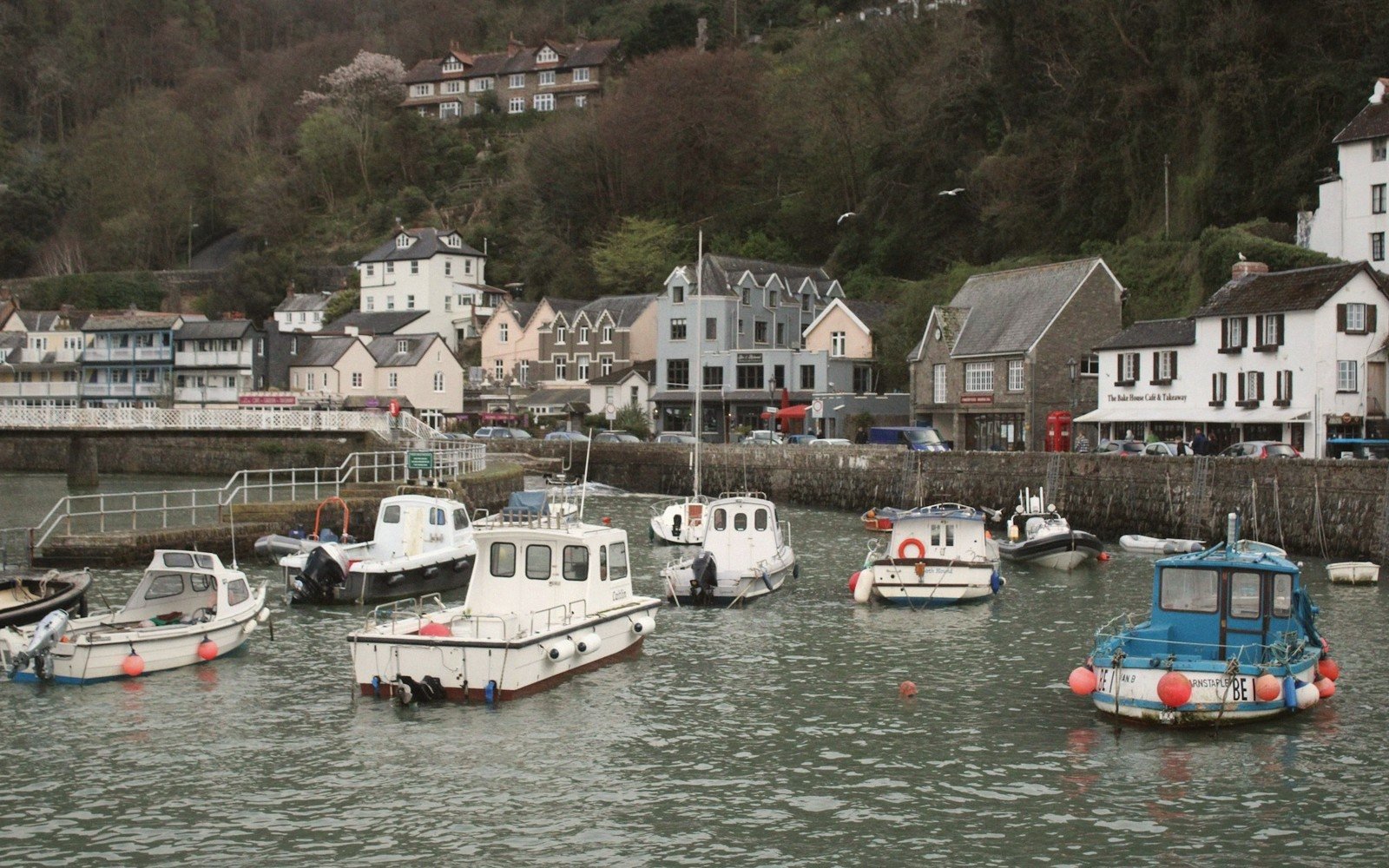
The clouds roll in, the sea turns grey — and Torquay turns out to have a very good hand of indoor cards to play.
When the Forecast Flips
Rain on the English Riviera is not rare, and it is not a disaster. The palm trees drip, the harbour gleams, and if you know where to go, a wet day can be one of the most satisfying on the whole trip. The trick is to lean into the bay's genuine depth — prehistoric caves, an 800-year-old abbey, live sharks circling a tank — rather than sitting in the hotel watching the clouds and feeling hard done by.
Start early, before the caves fill up. Kents Cavern, on the eastern edge of Torquay near Ilsham Road, is one of the most extraordinary sites in Britain: a limestone cave system whose contents include some of the oldest human remains ever found in northwest Europe, alongside the bones of cave lions, woolly rhinos and long-extinct bears. The guided tours run throughout the day, lasting around forty-five minutes, and the rock temperatures underground stay cool and steady whatever the sky is doing outside. It is the kind of place that makes you recalibrate your sense of how long people have been living in this particular corner of Devon — tens of thousands of years, as it turns out, long before anyone thought to call it a Riviera.
From Kents Cavern, head back towards the seafront and give yourself a proper morning at Torre Abbey. Founded in 1196, it is the best-preserved medieval monastery in Devon and one of the most layered historic buildings in the southwest. The abbey ruins — particularly the tithe barn, known as the Spanish Barn after the Armada prisoners held there in 1588 — sit alongside a house that grew up within the monastic shell over the following centuries, and together they hold a museum with collections ranging from Agatha Christie memorabilia to fine art and silverware. The walled gardens are worth a wander even in light rain; the Palm House and the historic glasshouse structures give you shelter while still feeling like you're outdoors. Allow a couple of hours, easily.
Lunch calls somewhere warm and unhurried. The seafront and harbour area have no shortage of cafés and restaurants — this is the moment for a bowl of chowder or a proper crab sandwich, the kind of thing that tastes better when the weather has earned it. If you're happy to extend the day into the afternoon with another major indoor stop, the Living Coasts aquarium on the harbourfront was, for many years, a favourite wet-weather destination. It's worth checking current opening arrangements before you visit, as coastal attractions in the bay have evolved in recent years — but the harbour area itself remains a lively, sheltered place to pass an hour, with independent shops, a covered market and good coffee within easy reach.
The trick is to lean into the bay's genuine depth — prehistoric caves, an 800-year-old abbey, live sharks circling a tank — rather than sitting in the hotel watching the clouds and feeling hard done by.
The Afternoon Stretch
By mid-afternoon, the question is usually whether to push on to one more attraction or to settle somewhere warm and properly comfortable. The answer, in Torquay, is the cream tea — and not as an afterthought. A Devon cream tea (scone, clotted cream, jam, in that order: cream first, then jam, which is the Devon way and not negotiable) in a good teahouse is a genuine pleasure, not merely a concession to the weather. A handful of tearooms in the Torquay area take this seriously, serving proper clotted cream and freshly baked scones rather than the shrink-wrapped version, and on a rainy afternoon a pot of tea and two well-made scones is exactly right.
If you still have energy and the rain has softened to drizzle, Cockington is worth considering — the ancient thatched village sits barely a mile from the seafront, tucked into a valley that feels improbably rural. The Drum Inn, designed by Edwin Lutyens in the 1930s, is one of the more atmospheric places in the bay to wait out a shower with a drink, and the walk between the thatched cottages and the mill pond does not require sunshine to work its effect. On a grey afternoon it has, if anything, a more convincingly old-English atmosphere than it does in high summer.
Torquay also has Agatha Christie written through it like lettering in seaside rock. The town produced the world's best-selling novelist, and the connections surface everywhere: in Torre Abbey's Christie display, in the Grand Hotel where she honeymooned on her first marriage, in the bust of her in Princess Gardens by the harbour. A wet afternoon spent tracing those connections — or simply reading one of her novels somewhere warm — has a fittingly atmospheric logic to it.
The English Riviera does sunshine convincingly well. But it does a rainy day surprisingly well too — and on a day when the rest of the bay has retreated to shelter, the caves and the abbey and the cream tea are better for the quiet.
— People & places
Kents Cavern
prehistoric limestone cave system on the eastern edge of Torquay; one of Britain's most important archaeological sites
Torre Abbey
medieval monastery founded 1196; now a museum and historic house near Torquay seafront
Cockington
ancient thatched village a mile inland from Torquay seafront
Spanish Barn
tithe barn at Torre Abbey; named after Armada prisoners held there in 1588
Agatha Christie
Torquay-born author; world's best-selling novelist
Edwin Lutyens
English architect who designed the Drum Inn at Cockington in the 1930s